
How to Choose the Right Grease for Machines , Motors and Bearings
Most bearing failures blamed on “bad grease” aren’t caused by bad grease. They’re caused by good grease used in the wrong place.
A premium lithium EP grease will destroy an electric motor bearing running at 3,000 rpm. An excellent high-speed synthetic will bleed out of a slow, heavily loaded pin joint in a week. Both products work perfectly. Just not there.
So here’s how to actually pick one.
What grease is made of
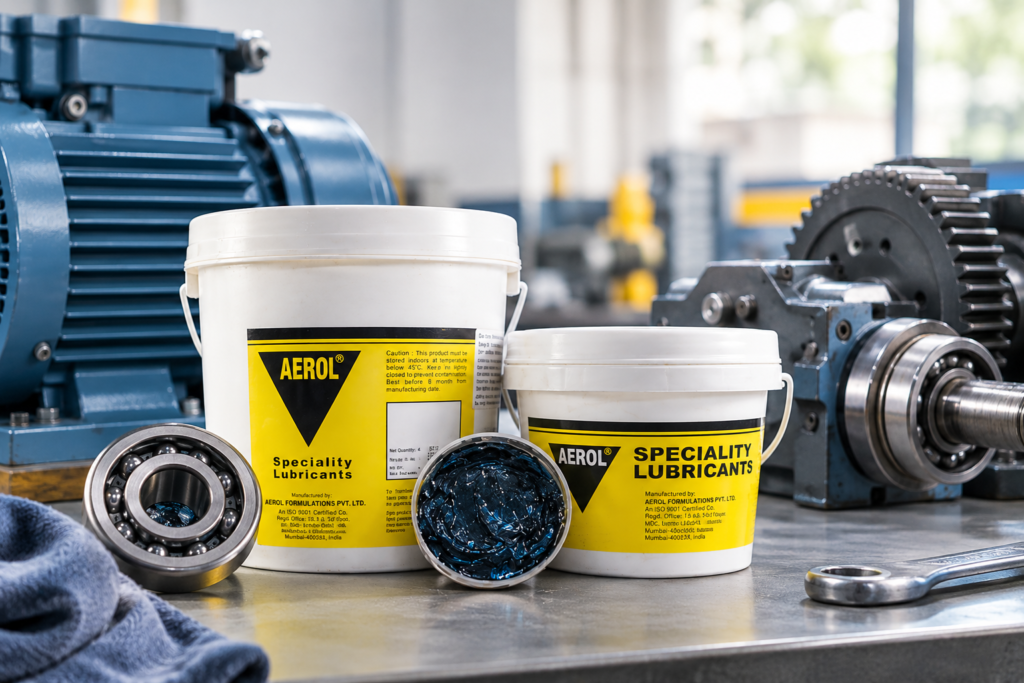
Grease is three things: a base oil, a thickener that holds the oil in place, and an additive package.
The thickener is the sponge. The base oil is the water in the sponge. The additives handle wear, corrosion and oxidation. When you grease a bearing, the thickener sits in the housing and slowly releases base oil into the contact zone. The base oil does the lubricating — not the thickener.
Once you understand that, most selection questions answer themselves.
The decision that matters most: base oil viscosity
If you get only one thing right, get this one.
Base oil viscosity has to match the speed and the load. The relationship is straightforward:
- High speed, light load → low viscosity base oil. Thick oil at high speed generates heat through churning, and that heat degrades the grease.
- Low speed, heavy load → high viscosity base oil. A thin oil gets squeezed out of the contact and you get metal-on-metal.
A conveyor pin turning a few times a minute under tonnes of load, and a spindle bearing spinning at 10,000 rpm, need opposite products. Speed and load, then, before anything else.
The thickener decides your temperature ceiling
| Thickener | Typical continuous limit | Best for | Watch out for |
| Calcium (conventional) | ~60–70°C | Wet, dirty, slow, low cost | Low temperature ceiling |
| Lithium | ~120°C | General multipurpose machine grease | Not for sustained high heat |
| Lithium complex | ~150°C | High temperature Grease for Machines , long relube intervals | Costlier than plain lithium |
| Calcium sulfonate complex | ~150–180°C | Heat plus water washout together | Firmer feel, pump sizing |
| Polyurea | ~160–180°C | Electric motor bearings, sealed-for-life | Poor compatibility with soap greases |
| Non-soap / synthetic non-melt | Very high, no melt point | Oven and furnace applications | Slower oil release |
Plain lithium is the workhorse. Aerol® EP Grease covers most of what a general plant needs — enclosed gears, plain and anti-friction bearings, conveyors, crushers, presses, winches, and heavy-duty bearings in steel plants, paper mills and mining.
When the temperature climbs or you want longer intervals between relubrication, lithium complex takes over. Aerol® LT Grease is built for bearings under moderate to high temperature and speed: glass, cement, metallurgy, hot air fans, electric motors, vibrating shafts, excavator bucket pins.
Where heat and water arrive together — and in a rolling mill, they always do — calcium sulfonate complex is in a class of its own. Aerol® CPSC Grease handles high speed, high load and high temperature with outstanding resistance to water washout, which is why it belongs in cold and hot rolling mills and mining equipment.
Dropping point is not an operating temperature
This is the most common and most expensive mistake in grease selection.
The dropping point is the temperature at which a grease for machines loses its structure and the oil separates out. It is a laboratory limit, not a target. Your safe continuous operating temperature is roughly 40–50°C below the dropping point.
A grease with a 190°C dropping point is not a 190°C grease. Run it continuously at 160°C and you’ll be repacking that bearing every few weeks.
If your application genuinely lives above the point where soap thickeners give up, you need a non-melt product. Aerol® Non-Melt Grease is designed for exactly that: conveyor bearings in ovens, oven chains, kiln castors, high-temperature exhaust fan and blower bearings, soot blower bearings, oven damper controls, furnace door hinges.
NLGI grade — how stiff it should be
NLGI numbers describe consistency, not quality:
- NLGI 0 / 1 — soft. Centralised lubrication systems, long feed lines, cold ambient conditions.
- NLGI 2 — the default. Around 80% of industrial grease sold is NLGI 2.
- NLGI 3 — firm. Vertical shafts, high speeds, applications where a softer grease would slump out.
If you’re running a centralised system in a Delhi winter and pumping NLGI 2 through 30 metres of line, you’re starving the far end. Drop a grade.
Matching grease to the job
Machine grease — general plant equipment. A lithium EP grease in NLGI 2 handles the majority of gearboxes, plain bearings, conveyors and general machinery. Where sliding and rubbing dominate rather than rolling, solid lubricants help: Aerol® HTLR Moly Grease suits splined shafts, threaded drive spindles, couplings, exposed slideways and gear guides.
Motor grease — electric motors. Electric motor bearings are a specific problem: high speed, moderate load, long service life, high temperature at the winding end. Polyurea is the industry answer. Aerol® PU Grease is designed for motor bearings at high speed and temperature, including H-type motors, and for pumps and wind turbines in harsh conditions. One caution — polyurea is generally incompatible with lithium greases. Never top up one with the other.
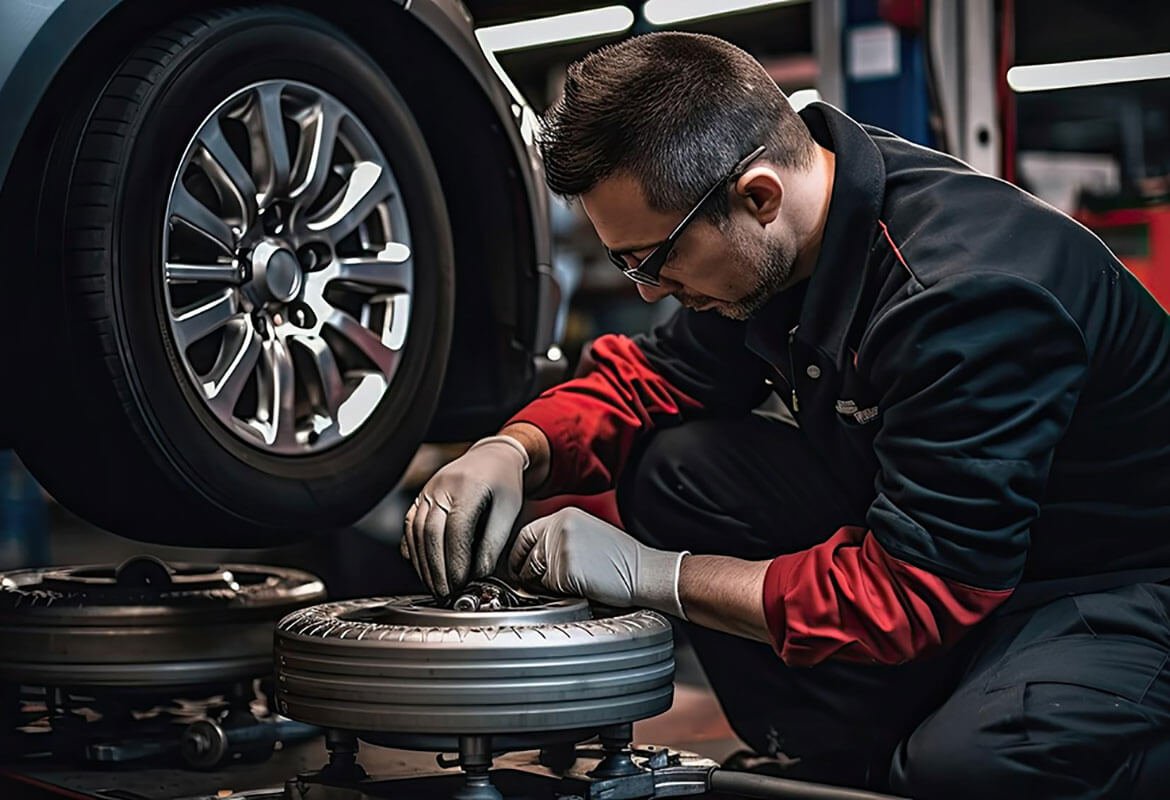
Best grease for bearings — it depends on the bearing. For high-speed plain and roller bearings, threaded spindles and ball screws under load, a fully synthetic grease like Aerol® HSB Grease is the right call, and it’s plastic and rubber compatible so it’s safe on mixed-material assemblies. For heavily loaded, slower bearings in steel plants and mining, EP lithium. For hot bearings, lithium complex or non-melt.
Vehicle grease and wheel bearing grease. Wheel bearings sit next to the brakes, so they get hot — a plain lithium grease is under-specified there, and lithium complex is the sensible baseline. For chassis, suspension, steering systems and slow-moving axles exposed to water and mud, Aerol® GP Calcium Grease is economical and genuinely water resistant. For CV joints, fifth wheels and constant-velocity assemblies, moly grease. Always check the vehicle manufacturer’s specification before switching.
Compatibility: the failure nobody sees coming
Mixing incompatible thickeners can turn two perfectly good greases into a soupy mess that runs straight out of the housing, or into a hardened block that blocks oil release entirely. Polyurea with lithium is the classic bad pair. Calcium sulfonate with polyurea is another.
When you change grease type, purge the old one out. Don’t just pump the new one in on top and hope.
Over-greasing is real
More grease is not more protection. Overfilled bearings churn, heat up and cook the base oil. In electric motors, over-greasing also pushes grease past the shield and onto the windings.
For most rolling element bearings, filling roughly one-third to one-half of the free space is right. Follow the OEM’s quantity, and follow the interval.
Get the specification checked
Aerol manufactures its speciality lubricant range — greases, compounds, pastes and oils built for high temperatures, heavy loads and harsh environments — at an ISO 9001:2015 and ISO 45001:2018 certified facility. If you’re unsure whether your application needs lithium complex, polyurea or a non-melt synthetic, share the speed, load, temperature and environment through the technical specifications request and get a grade recommended against the actual duty cycle.
FAQs
What is high temperature grease for machines?
A high temperature grease uses a thickener and base oil that stay stable well above the ~120°C ceiling of conventional lithium grease. Lithium complex handles around 150°C, calcium sulfonate complex and polyurea run higher, and non-melt synthetic greases have no true melting point at all, which is why they’re used in ovens and kilns.
What’s the best grease for wheel bearings?
A lithium complex grease is the sensible default because wheel bearings run hot from brake heat, and lithium complex holds up where plain lithium softens. Check the vehicle manufacturer’s specification first, and purge the old grease rather than mixing.
Can I mix two different greases?
Not safely. Incompatible thickeners can either break down into a running liquid or harden and stop releasing oil. Polyurea and lithium is the best-known bad combination. Purge the housing before switching products.
What does NLGI 2 mean?
NLGI 2 describes consistency — roughly the stiffness of smooth peanut butter. It’s the general-purpose grade used in most industrial and automotive applications. Softer grades (0, 1) suit centralised systems and cold conditions; NLGI 3 suits vertical shafts and high speeds.
Is dropping point the maximum operating temperature?
No. Dropping point is where the grease loses structure in a lab test. Safe continuous operating temperature is usually 40–50°C below it. Treating dropping point as an operating limit is a common cause of premature failure.
Which grease should I use in electric motors?
Polyurea grease is standard for electric motor bearings because it handles high speed and high temperature with long service life. Keep it separate from lithium greases — the two don’t mix.
How much grease should go into a bearing?
Generally one-third to one-half of the free space in the housing. Over-greasing causes churning, heat build-up and, in motors, contamination of the windings.